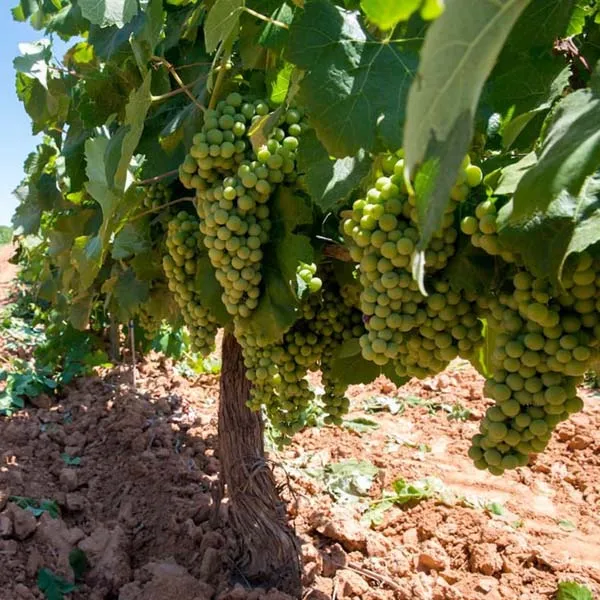
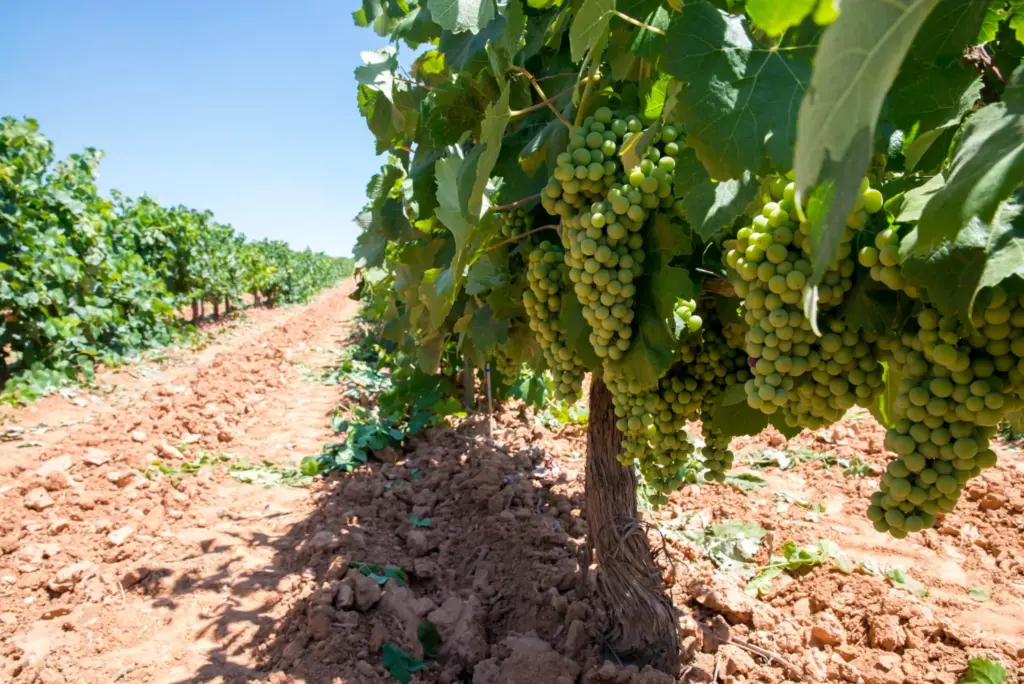
Planting density is influenced by factors such as the topography of the land, its potential, the vigor of the cultivar, Irrigation, the training system, fertilization, and pruning. The most common layout in most vineyards in the major wine-producing countries is in rows. The recommended planting spacing is 2.5–3 m between rows and 0.5–1.5 m between plants, resulting in densities of 4,000 to 2,200 plants per hectare. The recommended planting spacing for table grapes is 4×4 m, with a plant density of 625 plants per hectare.
It is recommended that rows always face the prevailing winds in the area, with a north-south orientation being the most suitable. Bare-root vines should be planted in winter, while container-grown vines can be planted at any time of year.
The amount of water applied depends on the soil’s water-holding capacity, the efficiency of the irrigation system, and the depth of the roots.
The vine is highly resistant to long periods of drought, as it has a deep root system. However, under conditions of severe drought, there may be a loss of yield and quality, making irrigation essential.
Although traditionally a rain-fed crop, irrigation in vineyards results in greater plant growth and increased production. Likewise, the plant is sufficiently prepared to ensure the following year’s production and avoids any type of stress on the vine that could lead to yield losses. Irrigation has beneficial effects as long as it is managed properly; to achieve this, it is necessary to know how much and when to irrigate. Among the favorable effects, the following stand out:
A significant increase in early shoots and the percentage of grape clusters.
Increased number of leaves and prevention of premature leaf drop.
It accelerates vine development and thus the onset of production.
It promotes flower initiation.
Increased harvest due to greater weight and number of grapes.
Improved fruit quality with proper irrigation.
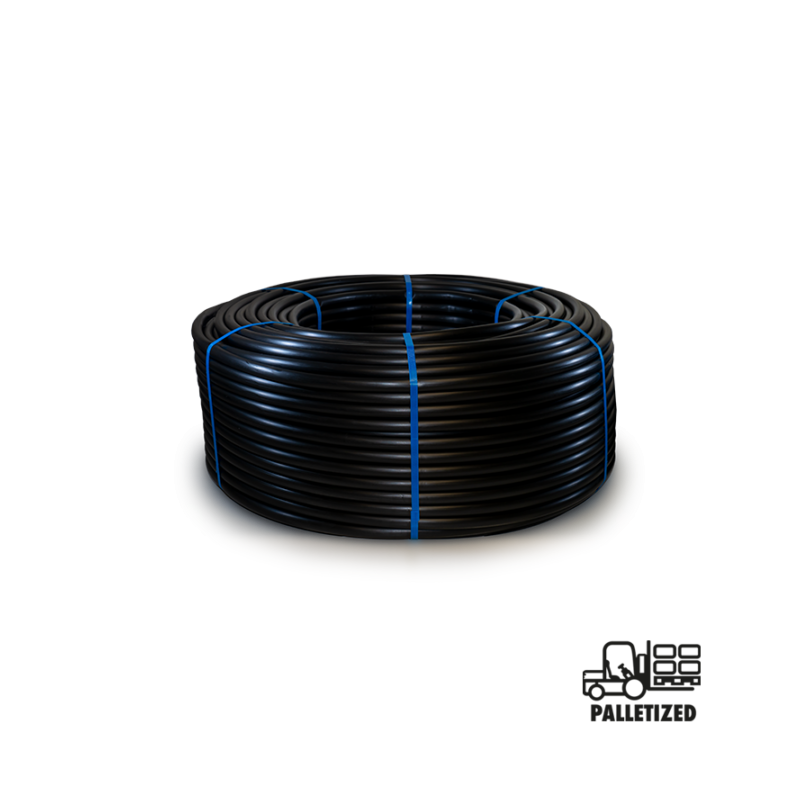
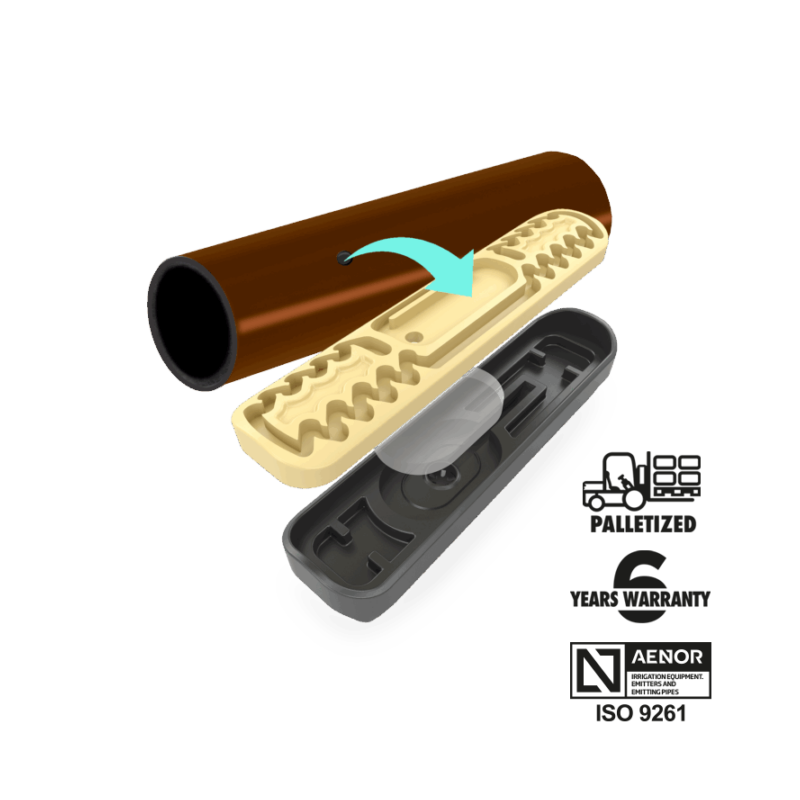
The benefits obtained in crops supplied by a well-designed drip irrigation system are significantly higher (sometimes reaching double) compared to rain-fed crops in very dry environments. With the right temperature and humidity, yield increases of around 20% can be achieved. An average yield can be estimated in the range of 9–12 tons per hectare.