





what is Fertigation and what is it based on?
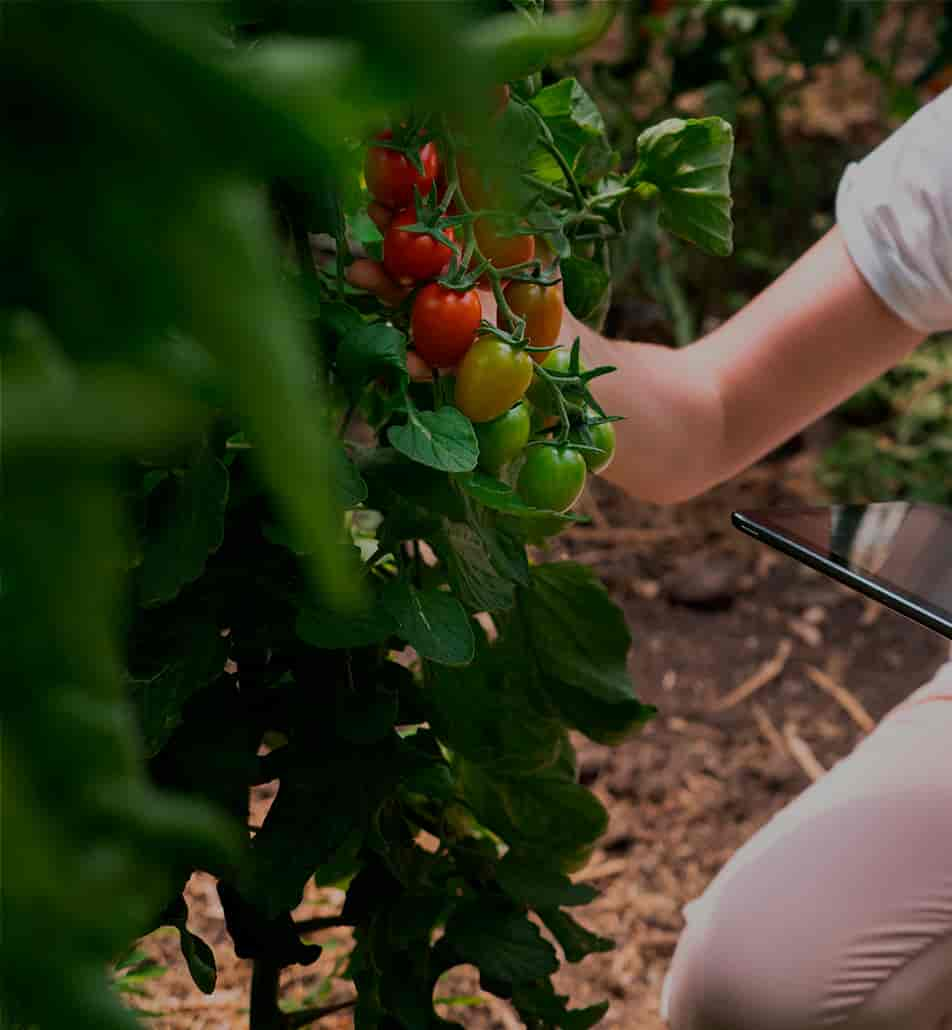
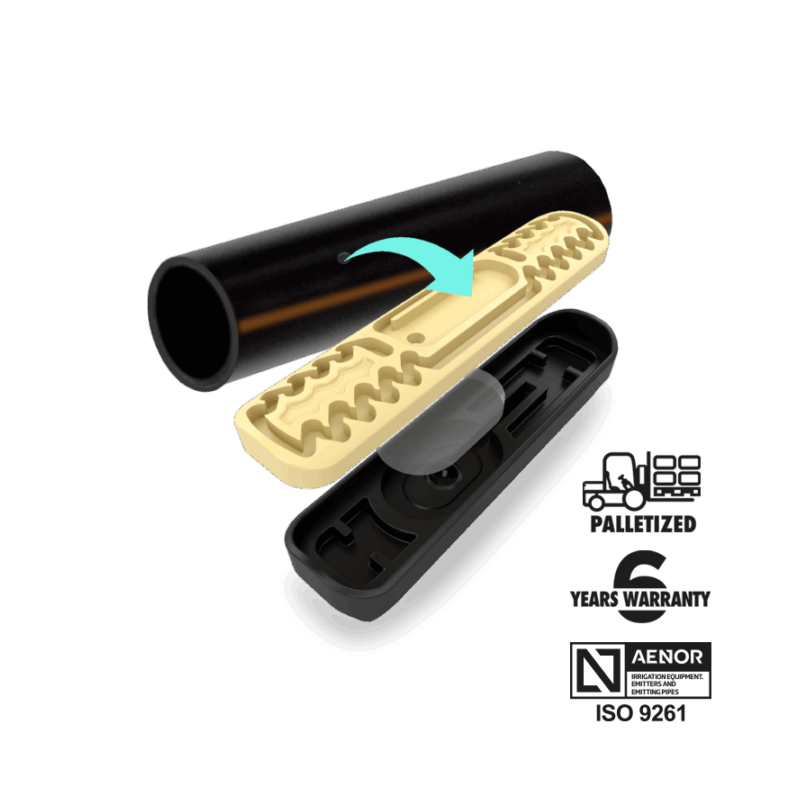
The need to optimize the resources destined to the correct development of the crop, considered as production factors, determines the use of different techniques to obtain the maximum economic yieldfertigationis the simultaneous application of water and nutrient solutions to the crop, using pipes and emitters as drippers. This method allows a precise and controlled application of nutrients directly to the active root zone of the plants
Fertigation systems used for fertigation
.
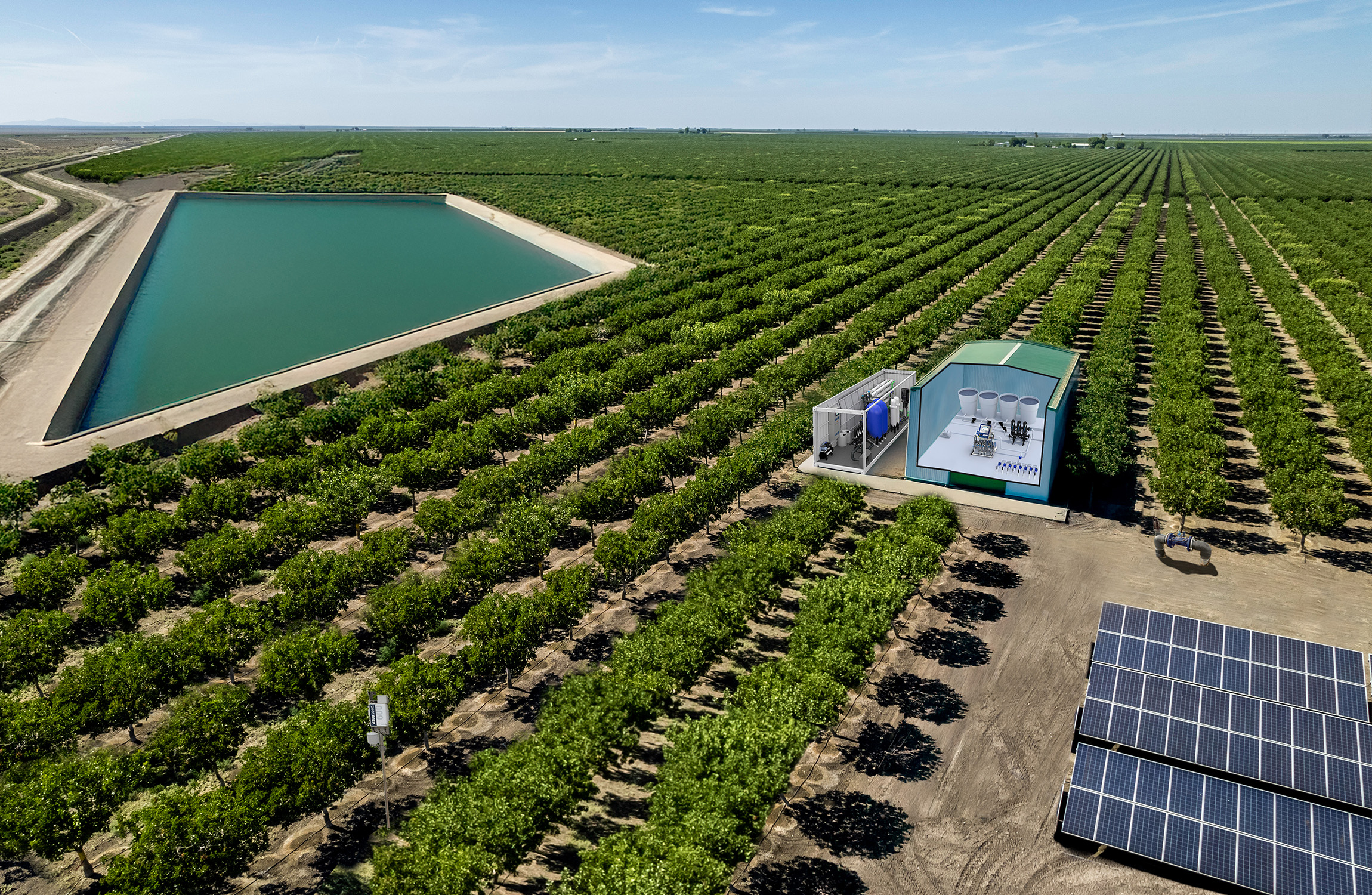
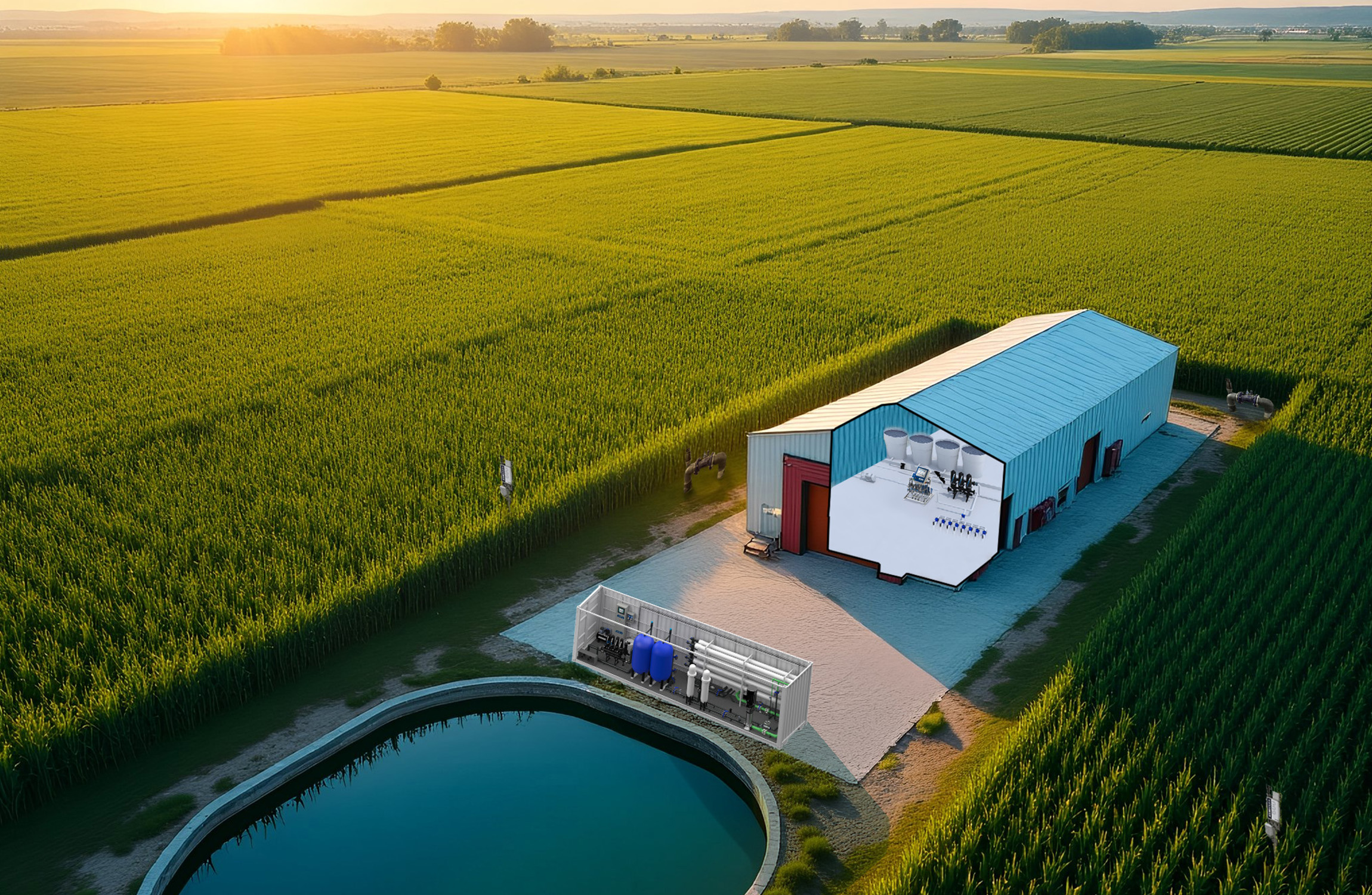
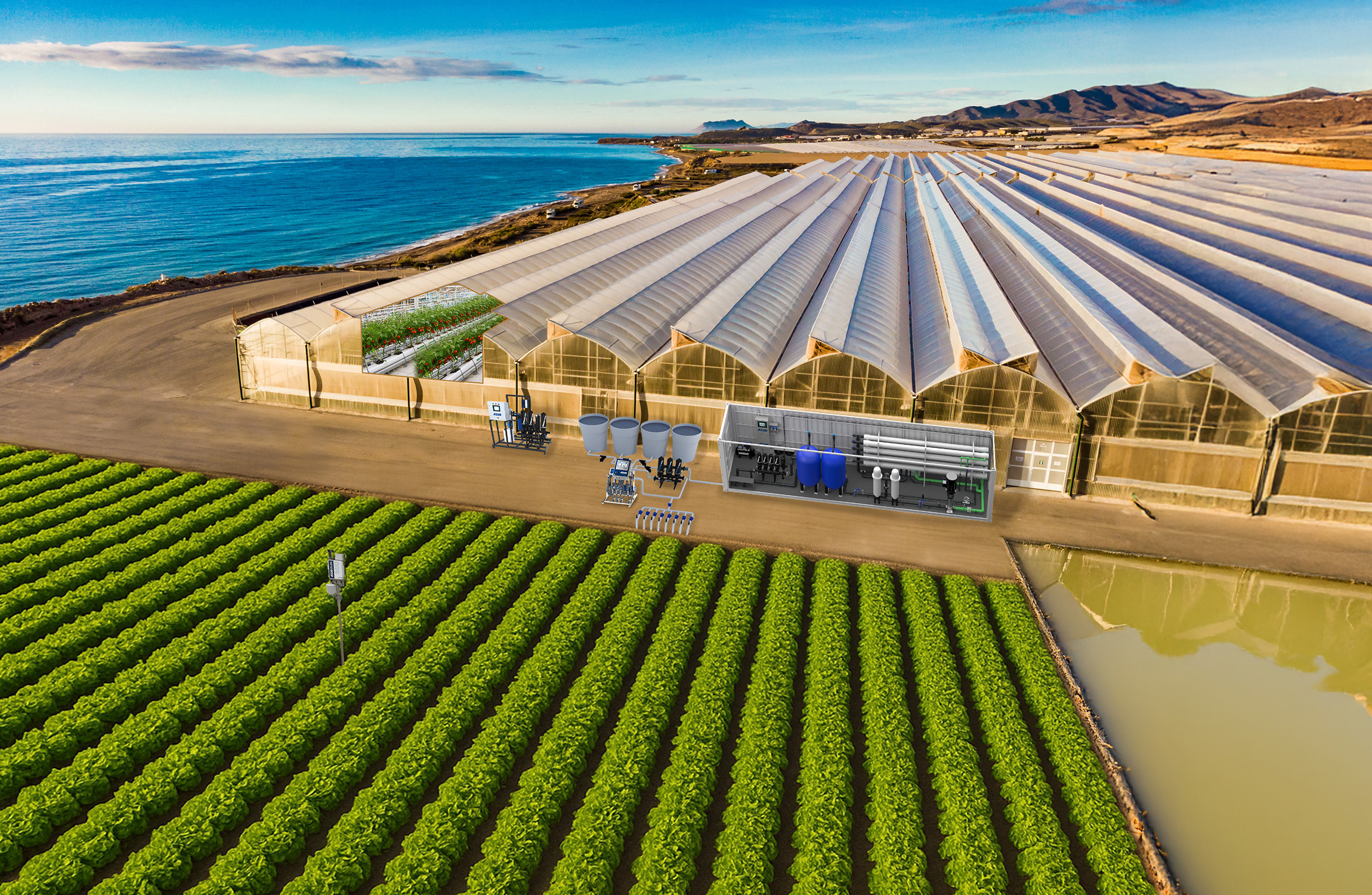
The systems used vary from simple manual injection systems to sophisticated automated systems with multiple injectors and electronic controllers that allow regulating the frequency and quantity of the inputs in a precise way according to the specific needs of the crop and soil conditions
Types of Fertilizers in Fertigation
.
Fertilizers used in Fertigation are water soluble and can be of mineral or organic origin. The most common include nitrates, phosphates, potashes and micronutrients. These fertilizers are selected based on crop needs and specific soil conditions
Irrigation systems suitable for Fertigation
.
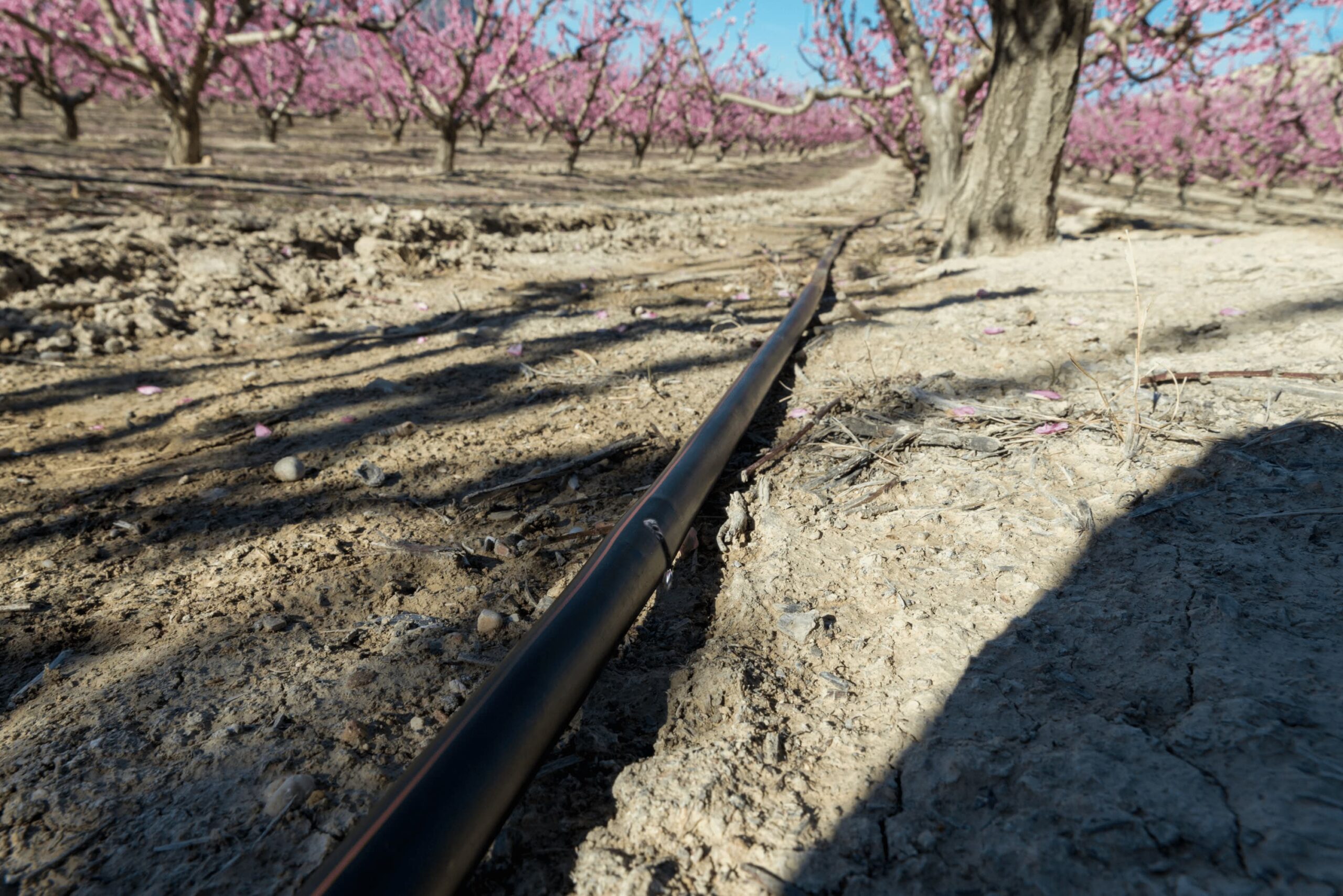
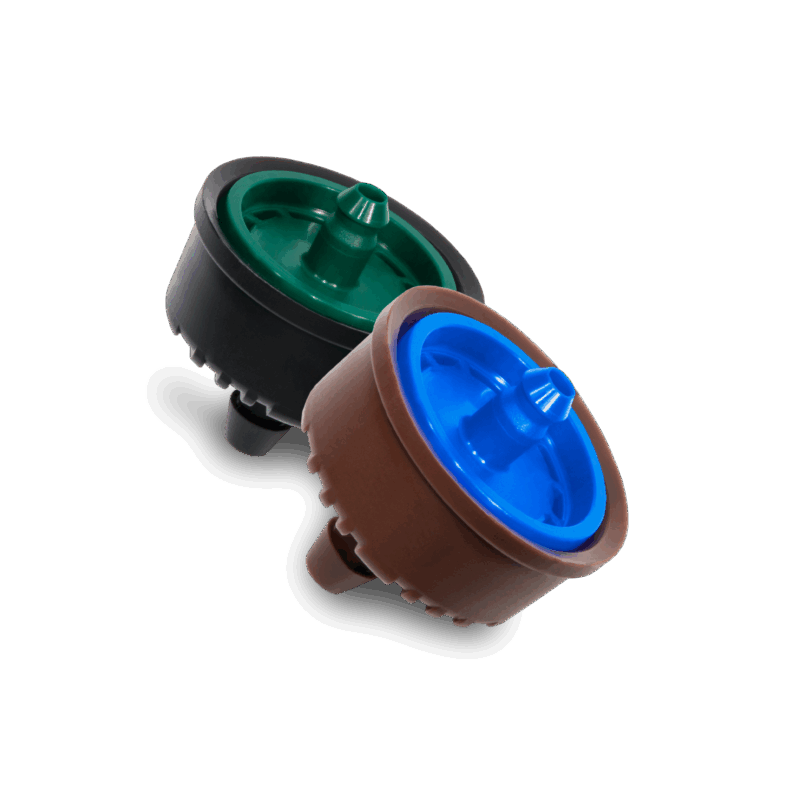
The most suitable Irrigation systems for Fertigation include thedrip Irrigation, SUB-SURFACE DRIP IRRIGATION and Micro-sprinklers. These systems allow for uniform distribution of water and nutrients, minimizing evaporation and runoff losses. Drip irrigation is especially effective in Fertigation due to its ability to maintain a constant and localized supply of nutrients
Benefits of Implementing Fertigation
.
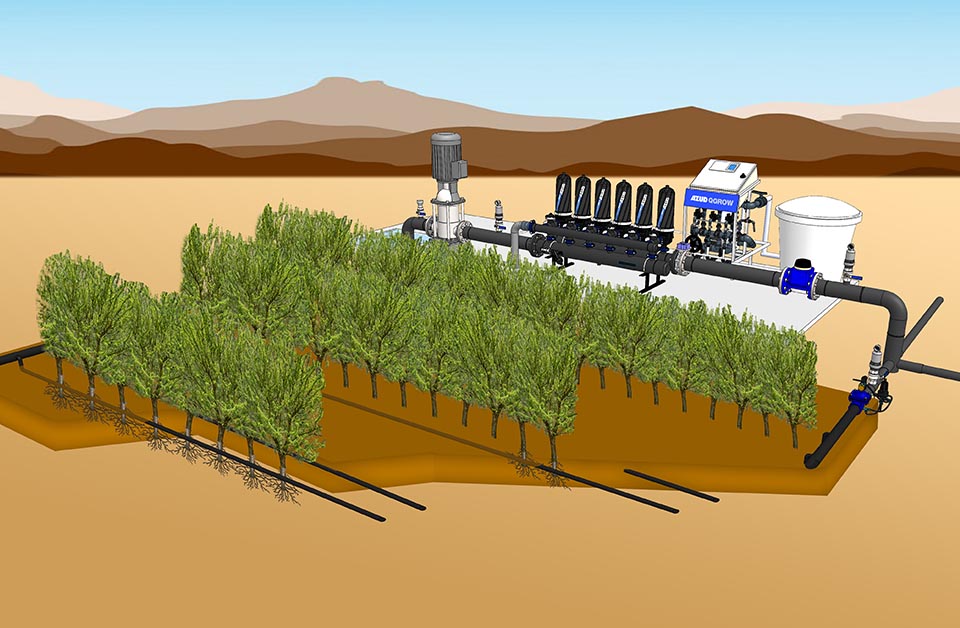
The undeniable economic and agronomic advantages of fertigation are due to the inherent characteristics of the fertigation process itself
- Joint application of irrigation water and fertilizers required by the crop.
- Location of these requirements only next to the active root system.
- High Frequency of application.
- Ease of fertilizer application and labor savings.The application of Fertilizers through the Fertigation process is not conditioned by the availability of personnel or inclement weather and represents a lower operational cost compared to the cost of applying fertilizers directly to the soil manually or mechanically.
- Efficient Use of the fertilizers provided.The application of nutrients in a localized manner in the active root area and highly fractionated throughout the crop cycle guarantees an adequate availability according to the needs of the plant at each moment, which allows a better use of the nutrients provided, reducing the percentage of losses caused by leaching, especially of nitrogen. As fractionation increases, losses due to leaching and/or blockage of nutrients in the soil decrease.
- High availability of nutrients.The localized application together with the high Frequency and fractionation of the inputs demanded by the crop favors their availability and the ideal conditions for the assimilation of the water and nutrients supplied.
- High control in the dosage and fractionation of the fertilizers supplied.The supply of water and nutrients to the crop, in a highly controlled manner, allows the application doses to be adjusted to the real needs of the crop depending on the phenological stage of the crop and the desired production objective. With this practice it is possible to increase crop yields, obtaining the desired balance between increased production, improved crop quality and earliness or date of entry into production.
Multi Injection Fertigation Equipment
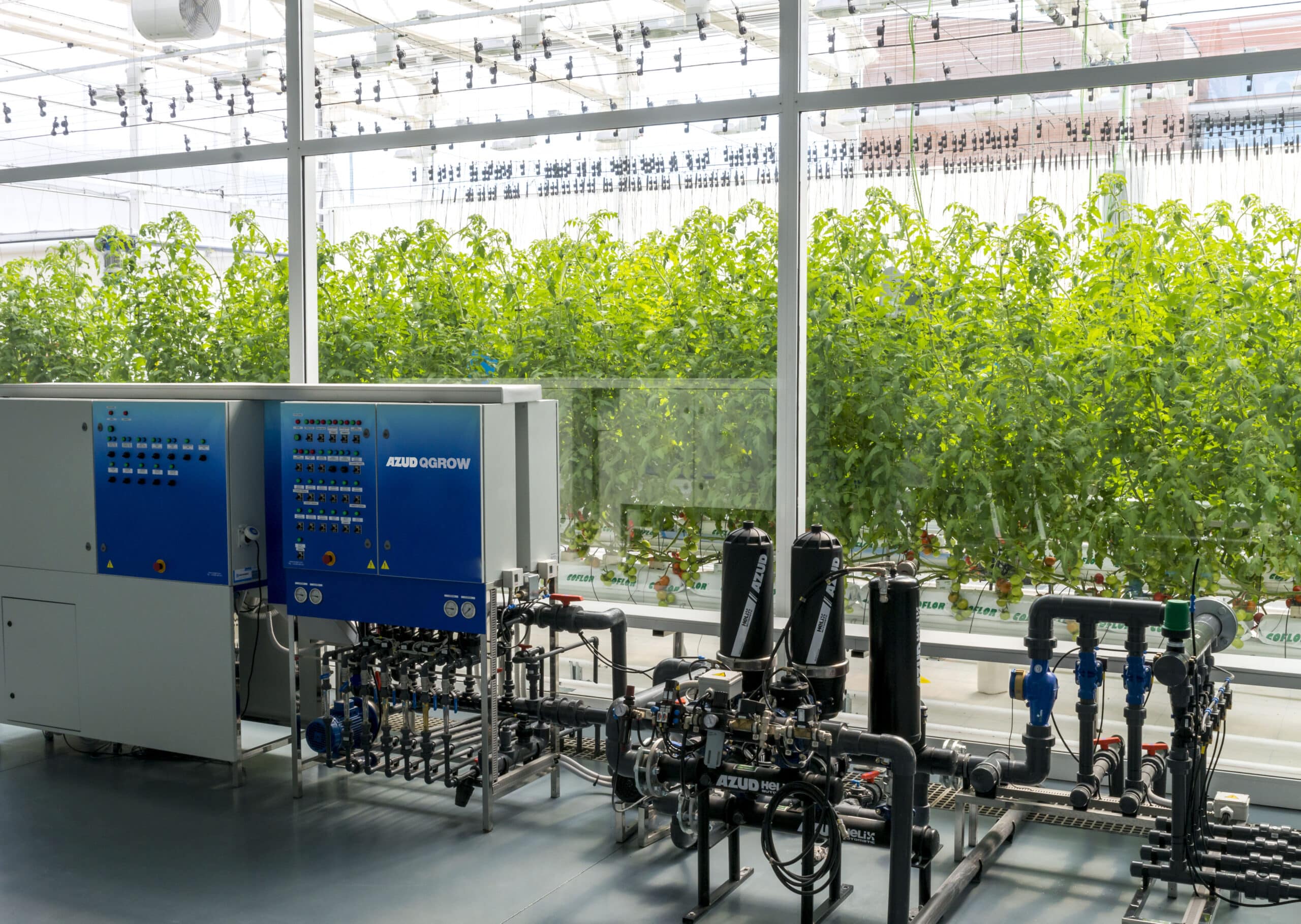
Of all the existing systems for the supply of the nutrient solution required by the crop, the systems based on the use of Venturi injectors are the ones that offer the most advantages, whether of an economic and/or agronomic nature
Characteristics of a multi-injection system
.
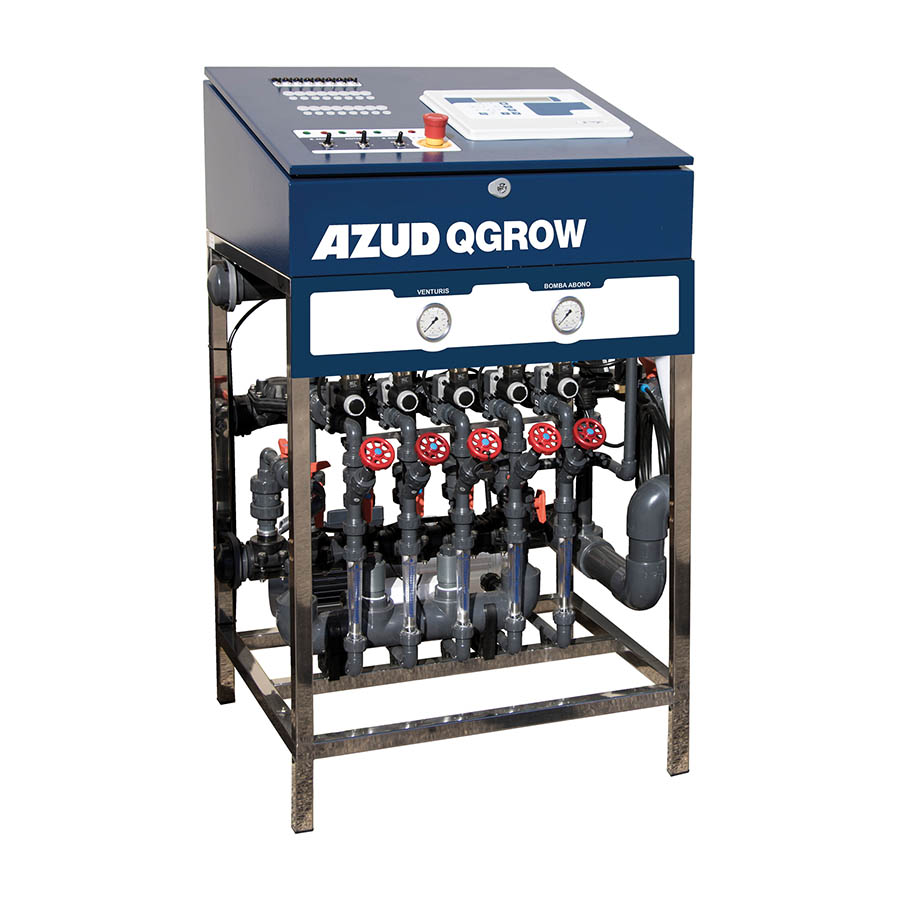
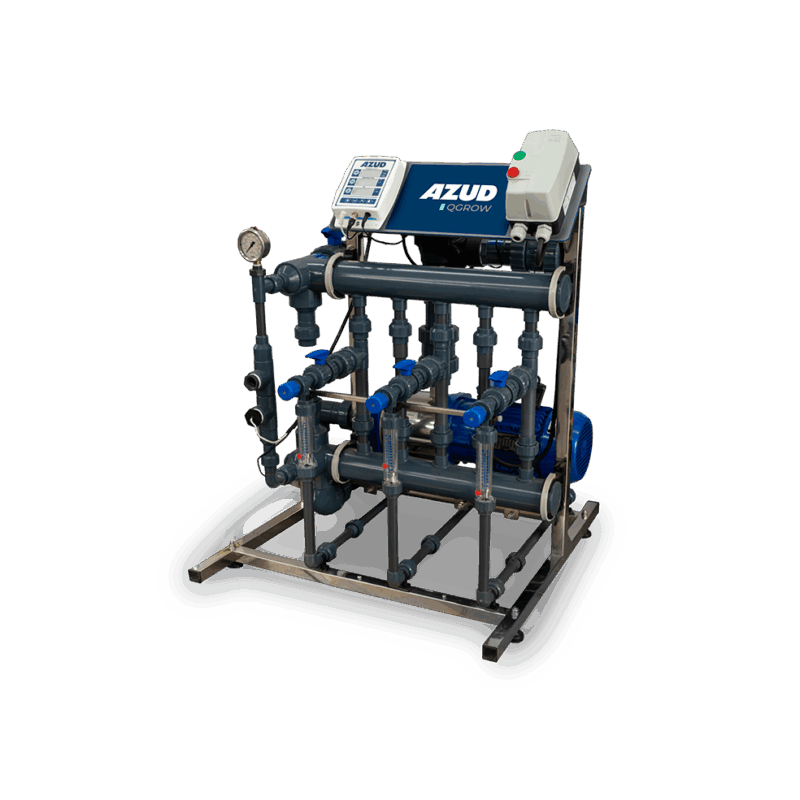
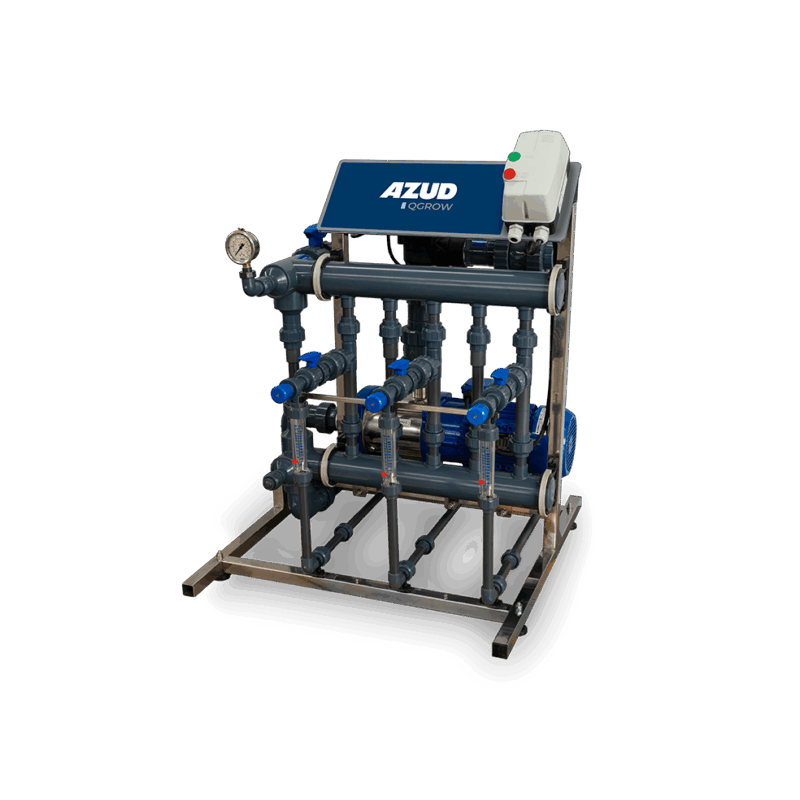
The AZUD QGROW multi-injection systems perform a proportional and balanced nutrition through the controlled and simultaneous incorporation of all the fertilizers with the frequency, quantity and nutritional balance required to reach the desired productive objective. The MULTI-INJECTION SYSTEMS is composed of a set of manifolds (Power supply and return) that allow the parallel interconnection of the probe holder kit and the injection arms that make up the equipment.
Benefits of multi-injection in Fertigation
.
- Balanced nutrition: It is possible to adjust, in quantity and proportionality, the unit injection level of each of the fertilizers to be injected simultaneously to achieve the nutrient concentration and nutrient balance required to reach the desired productive objective.
- Crop nutrition by means of a multi-injection system does not require the preparation of the mother solution, it allows the simultaneous application of fertilizers incompatible with each other and at the same time allows a more versatile and dynamic nutrition by being able to independently adjust the nutrient balance required by each of the irrigation sectors.
The ease and possibilities offered by this equipment for the automation of the Fertigation process conditions the use of elements that provide autonomy, versatility and control of this process. The complete automation of crop Fertigation leads to substantial improvements: higher productivity of water and nutrients supplied and a productive level with an adequate balance between earliness, quality and quantity of the plant organ with commercial value
Advantages of the automation of multi-injection systems
.
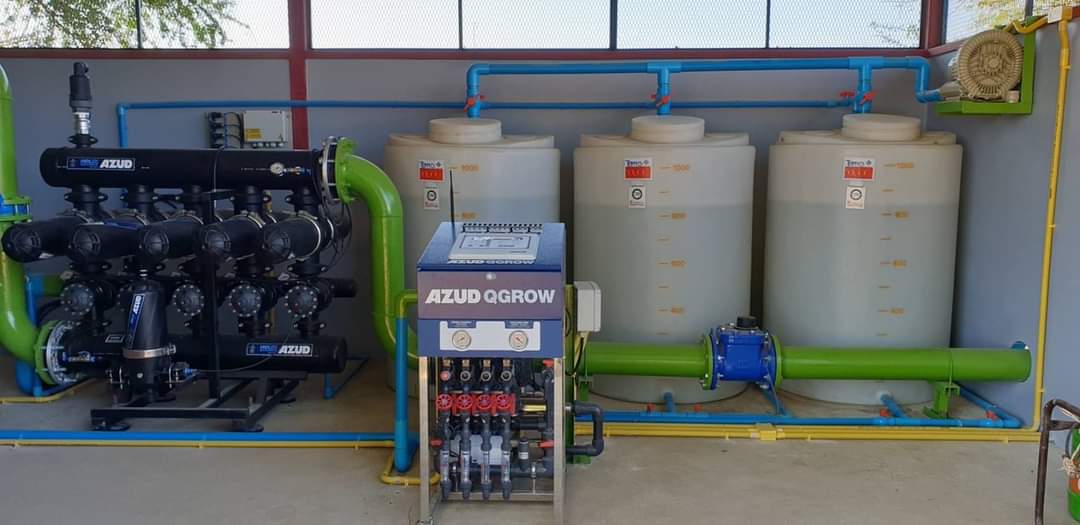
Automation allows the Fertigation process to be carried out in a comfortable and efficient way, providing the following economic and functional advantages
- System autonomythe automation of the water and nutrients supply process allows the Irrigation practice to be carried out in a totally autonomous way without the direct intervention of the operation personnel, avoiding the dependence and availability of the operation personnel to carry out the supply with the required frequency and duration.
- Efficient nutrition:The automation of the Fertigation process allows a highly fractioned supply and a precise control of the desired unit quantity and nutritional balance, guaranteeing optimum injection levels, thus achieving greater profitability of the fertilizers supplied: lower percolation losses, higher absorption rates due to the high humidity in the active root zone and the possibility of adapting the pH level to the optimum values that guarantee greater absorption.
- Versatility:The possibility and facility to establish in each Irrigation sector the injection rates and the proportionality between the different fertilizers that are injected simultaneously makes the MULTI-INJECTION SYSTEMS AZUD QGROW highly flexible tools. It allows the supply of nutrients based on application time, proportional supply to the circulating flow rate or by controlling the pH and EC values.
- Traceability:It allows to know the injection levels. Instantaneous injection Flow rates and accumulated volumes of each of the fertilizers incorporated to the crop. The information storage capacity, highly useful for the user, gives a wide knowledge of the nutrient input levels and the period in which they have been made.
how to implement a MULTI-INJECTION SYSTEMS fertigation system?
.
- The implementation of this equipment to the Irrigation system is done by means of a Bypass connection.
- The derived flow rate enters the multi-injection system through the inlet manifold which, fed by one of its ends, allows to jointly distribute the driving flow rate to all the Venturi injectors integrated in the equipment and to the probe holder kit. The pressure value in the manifold corresponds to the pressure available in the irrigation systems.
- The return manifold allows to jointly collect the motor flow rate together with the nutrient solution water flow rate sucked by all the Venturi injectors integrated in the equipment together with the transit flow rate derived through the probe holder kit. The total flow rate is conducted to the suction line of the auxiliary electric pump.
- The auxiliary electric pump provides the necessary pressure value to incorporate the flow rate coming from the return manifold to the irrigation line.
AZUD Plant Nutrition Solutions
.
Manual fertigation equipment
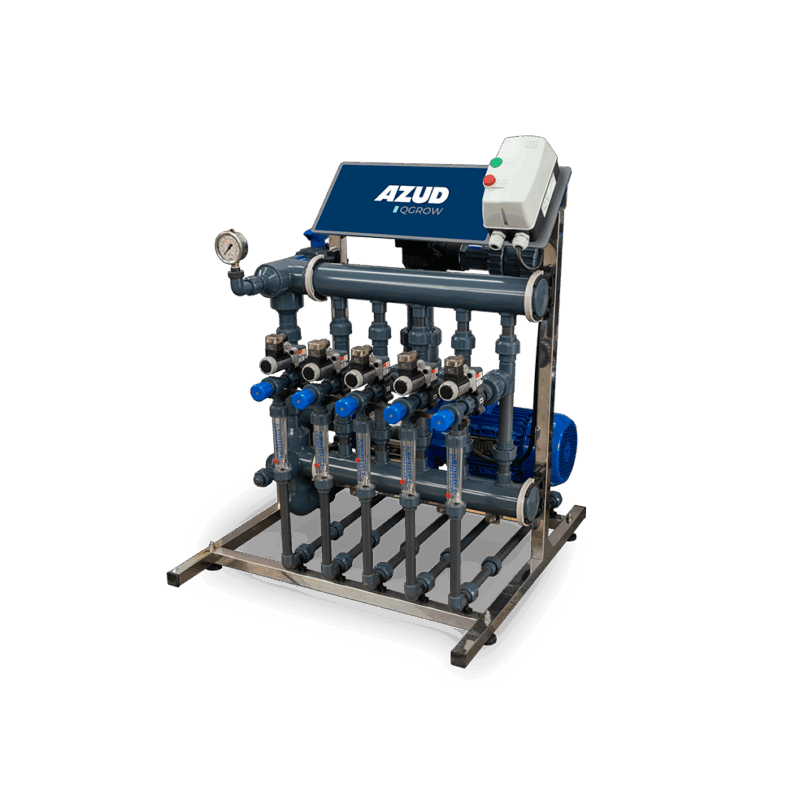
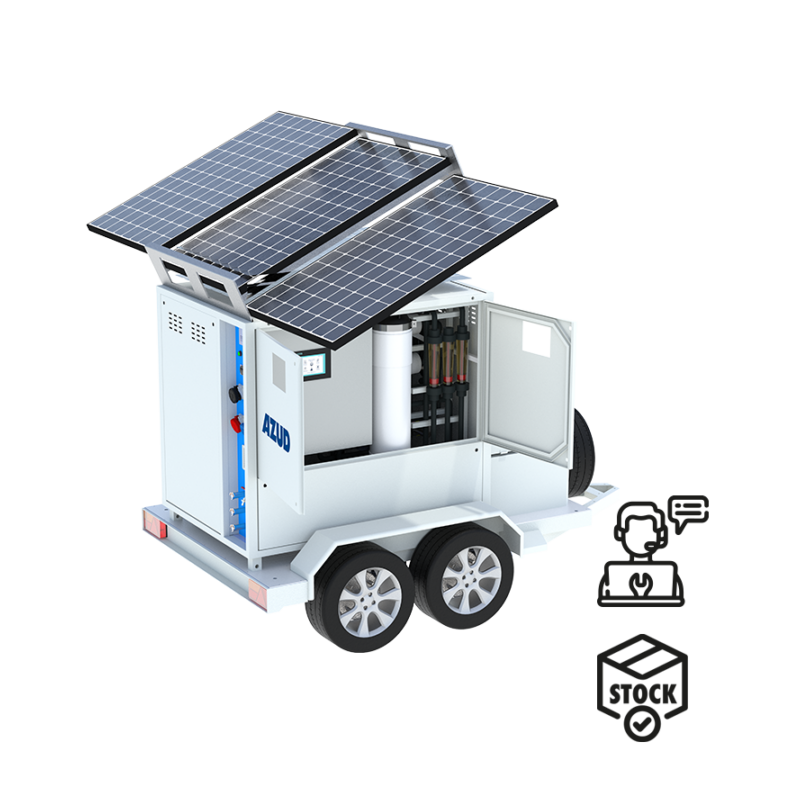
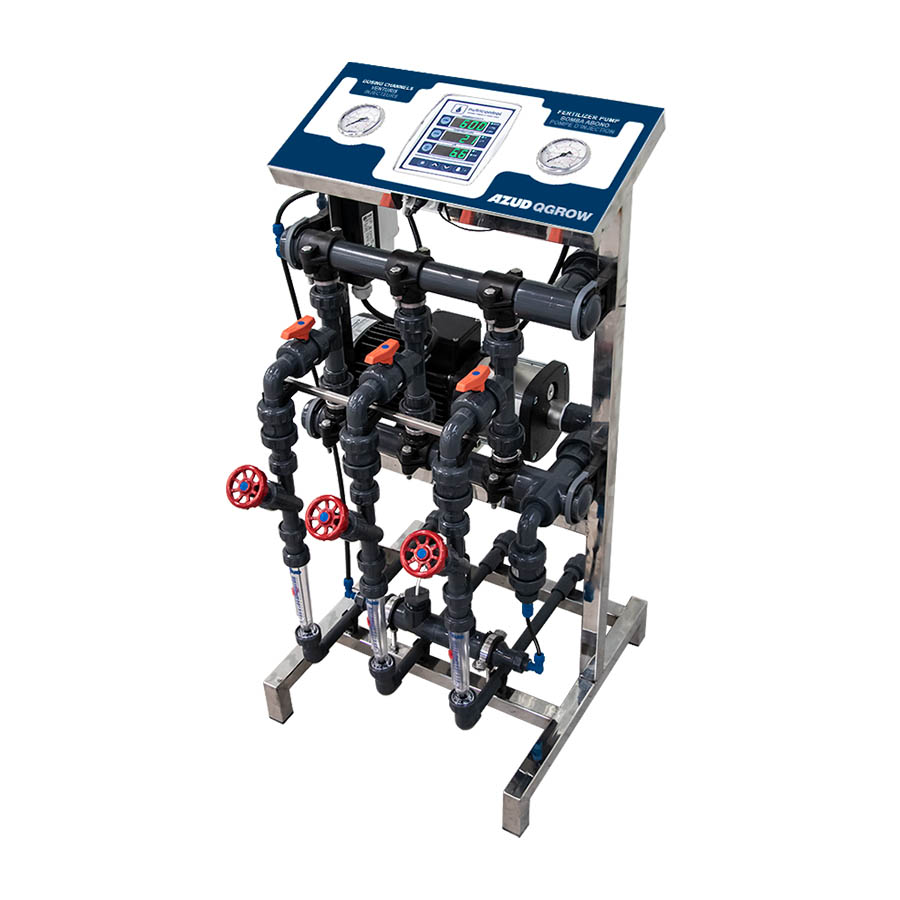 AZUD has two Models of Manual fertigation equipment of manual operation, for simultaneous multi-injection of nutrients to the Irrigation system:AZUD QGROW BS yAZUD QGROW VaZUD’s Manual fertigation equipment offers a series of features that improve productivity and efficiency in the application of nutrients. They stand out for their capacity of Homogeneous dosing of nutrients throughout the Irrigation cycle, which ensures a continuous and balanced feeding for the plants. The reliability of these equipments is based on the Injection system by means of Venturi, manufactured in resistant polymers and without moving parts, which minimizes maintenance and ensures a long lasting operation. In addition, they are highly compatible, allowing the injection of fertilizers and complementary products of different nature, thus offering greater flexibility. Simplicity is another of their advantages, with an easy and intuitive injection regulation that facilitates their use and allows quick and precise adjustments. Last but not least, the ModelAZUD QGROW V includes advanced control with pH, electrical conductivity (EC), and temperature displays, providing critical data for optimal injection adjustment and ensuring that nutrients are applied under ideal conditions for absorption and effectiveness
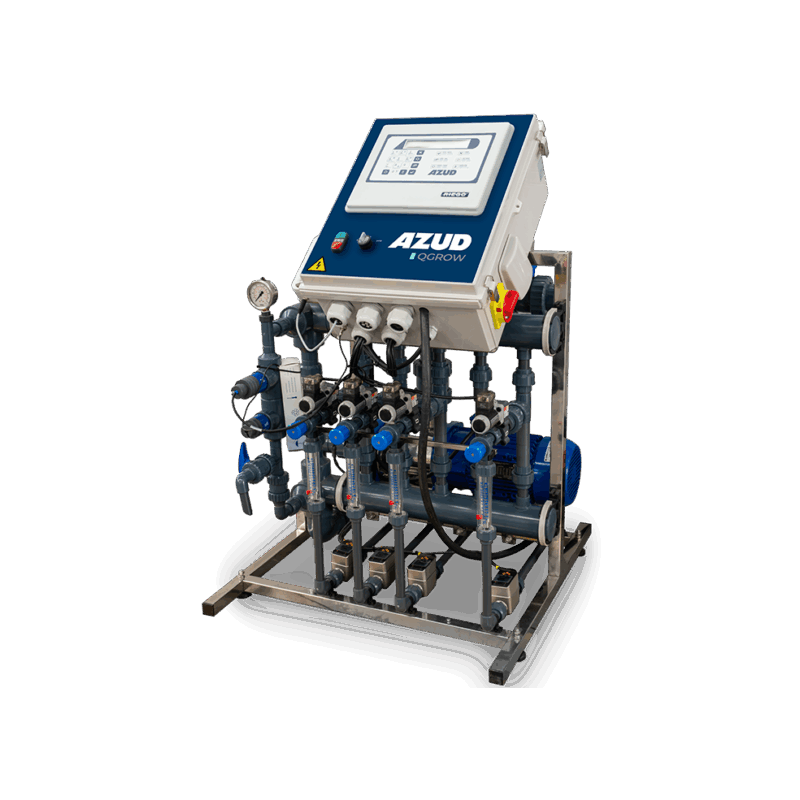
Automatic fertigation equipment