When faced with a new Irrigation project, the first step is to determine the Basis for the calculation so that the results are reliable and accurate. The parameter ofevapotranspiration (ET) is perhaps the most relevant of all. Underestimating this value can result in situations of water stress in the crop and consequent yield loss, while overestimating ET can generate high material and installation costs. On the other hand, an overestimation of ET can generate high material and installation costs. It is therefore necessary to correctly determine the evapotranspiration value, since this is the starting point for all other calculations in the design phase. However,what is evapotranspiration?
TheFAO defines TE as as “the combination of two separate processes whereby water is lost through the soil surface by evaporation and on the other hand through crop transpiration“These are two independent processes, but strongly linked to each other. Let’s focus on each one separately
EVAPORATION
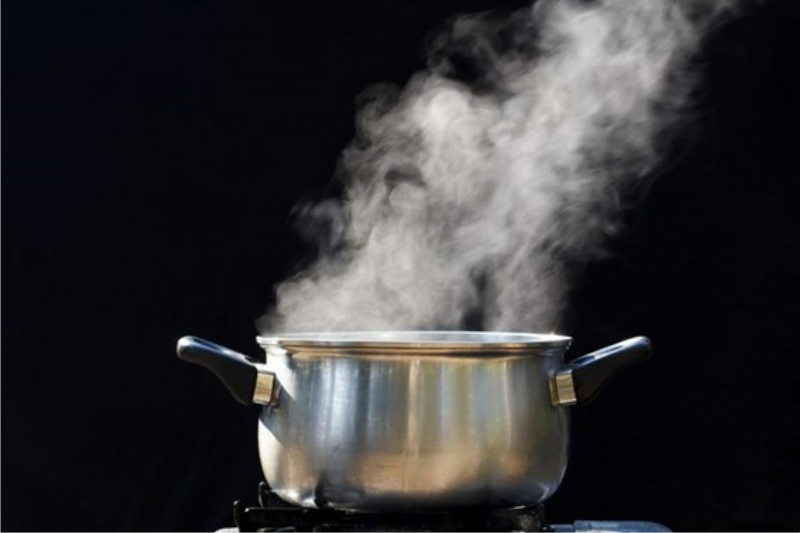
You have probably noticed the steam that is produced when you heat water in a pan for cooking. Precisely, that steam is the result of the evaporation of water, but what exactly is happening there? Let’s start from the beginning. Water can be in 3 different states: solid, liquid and gas. This translates into ice, water and steam. The energy level determines the state in which the water particles occur. Thus, when we pour water into a pan to cook rice and heat it, the energy state of the water increases progressively until it reaches the limit at which it changes state from liquid to gas: water vapor. This is what is known as the process ofevaporation. The vapor escapes from the pan and disperses into the atmosphere
Water can evaporate from any surface, such as seas, oceans and rivers, and even the roof of a house. Returning to the previous example of the kitchen, if we change the pan for a farmland and the fire that heats by solar radiation, we find evaporation from the ground into the atmosphere, a process that occurs naturally everywhere. This process occurs naturally everywhere, depending on the energy of solar radiation (together with other climatic factors) water in vapor form leaves the soil surface at a different rate. This tells us that the evaporation process depends on local climatic conditions, which can vary daily
The rate of evapotranspiration varies daily and depends directly on solar radiation and other climatic conditions.
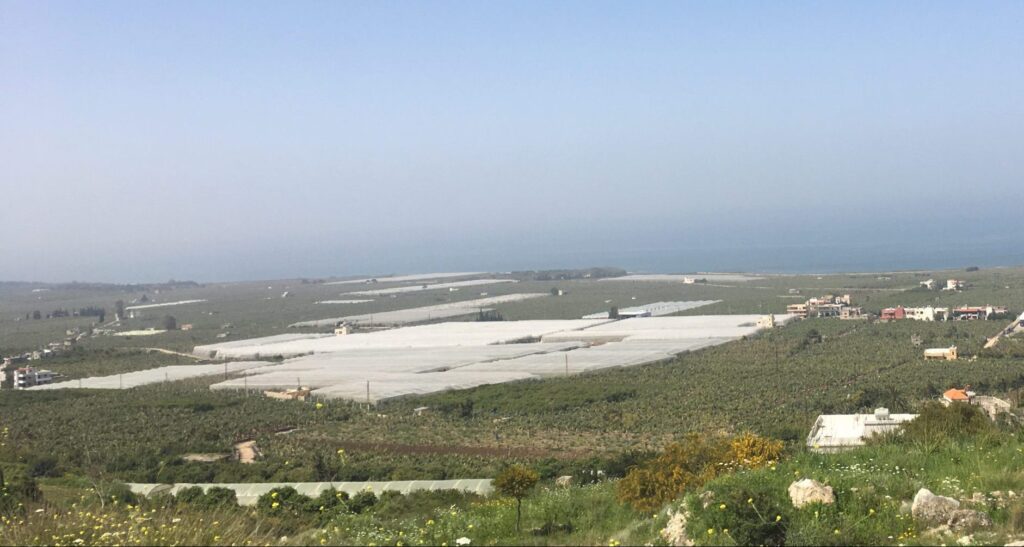
On the other hand, the type of soil affects the evaporation rate of the soil surface, since depending on the texture of the soil, the particles retain more or less “force” water between the pores. Similarly, if we install some type of cover on the ground, whether natural or artificial, the direct action of the sun on the soil surface is reduced, also reducing evaporation
Soil texture, humidity and cover also condition the level of evaporation.
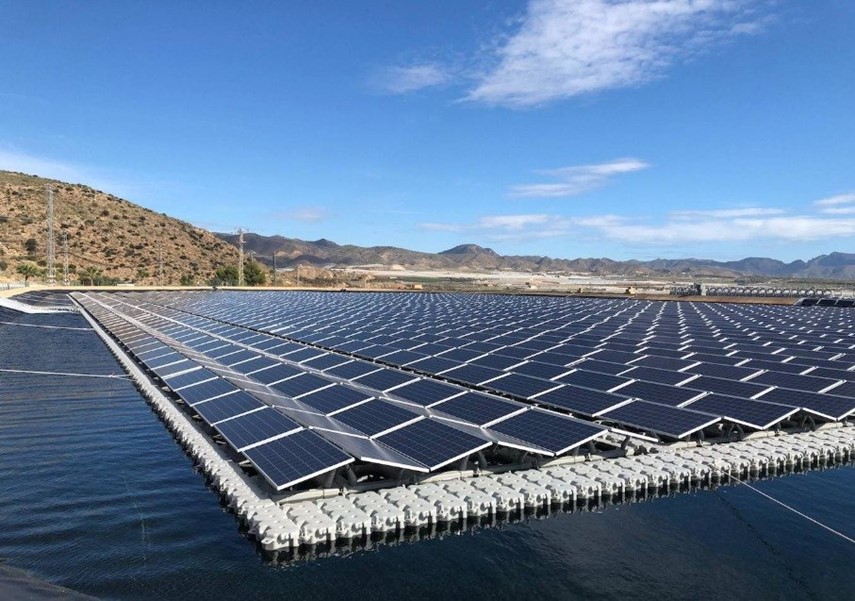
In the photograph above, we can see the installation of a series of photovoltaic panels on a floating Frame on an irrigation reservoir. Instead of energizing (evaporating) the water, the solar energy incident on the surface is used to generate electrical energy. In this way, water losses due to evaporation are reduced and, in addition, energy is obtained from a renewable and sustainable source
TRANSPIRATION
Let’s imagine a healthy plant growing in our garden. The roots are developed deep and obtain nutrients and water throughout the soil. This water and nutrient solution moves up from the roots through the plant’s entire plant Frame to the leaves. It is primarily in the leaves that this water, and the dissolved nutrients, are harnessed to generate the energy needed to continue growing and developing the vegetative organs. The water that is not consumed in this process is released through a kind of window on the underside of the leaves (stomata). This volume of water, which has passed from the leaf to the atmosphere, is known as the transpiration process. Generally, the more developed the plant is, the more water and nutrients it will require, resulting in greater transpiration. However, in the event that there is insufficient soil moisture available to the plant, the stomata will be inactive and the transpiration process will be interrupted
The rate of transpiration varies daily, as it depends directly on local weather conditions and on the state of growth and health of the plant.
EVAPOTRANSPIRATION
Then, if we add the amount of water evaporating directly from the soil and the amount transpired by the plant, we obtain the evapotranspiration rate. These two parameters, evaporation and transpiration, are closely linked when we refer to the application of irrigation. The Irrigation system used will condition the proportion of each of these parameters, since a sprinkler irrigation system has nothing to do with a localized irrigation system
did you know that only 1-5% of the water absorbed by plants is used in their own metabolism, while the remaining 95-99% is released into the atmosphere (transpired)?
DRIP IRRIGATION
Irrigation is normally applied during the period of lowest rainfall and highest plant water demand, coinciding with the time when the moisture content in the upper part of the soil profile is negligible for the purpose of accounting for evaporation.In thelocalized Drip Irrigation Systemsunlike flood irrigation, furrow or sprinkler irrigation, only a part of the surface area occupied by the crop is wetted, concentrating the application of water in the area with the highest root density of the plant. This facilitates water absorption by the roots and reduces water evaporation in the non-cultivated surface area, concentrating in the irrigation application zone. If we manage to reduce the evaporation rate and, at the same time, carry out a precise irrigation practice, we can obtain great benefits by optimizing the available resources
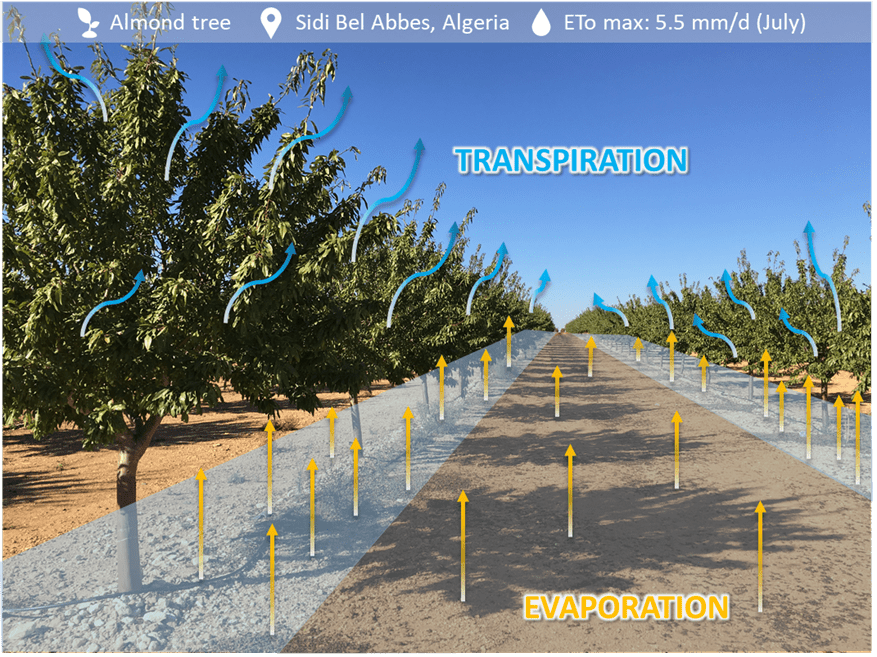
SUB-SURFACE DRIP IRRIGATION (SDI) SUB-SURFACE DRIP IRRIGATION SYSTEMS (RGS)
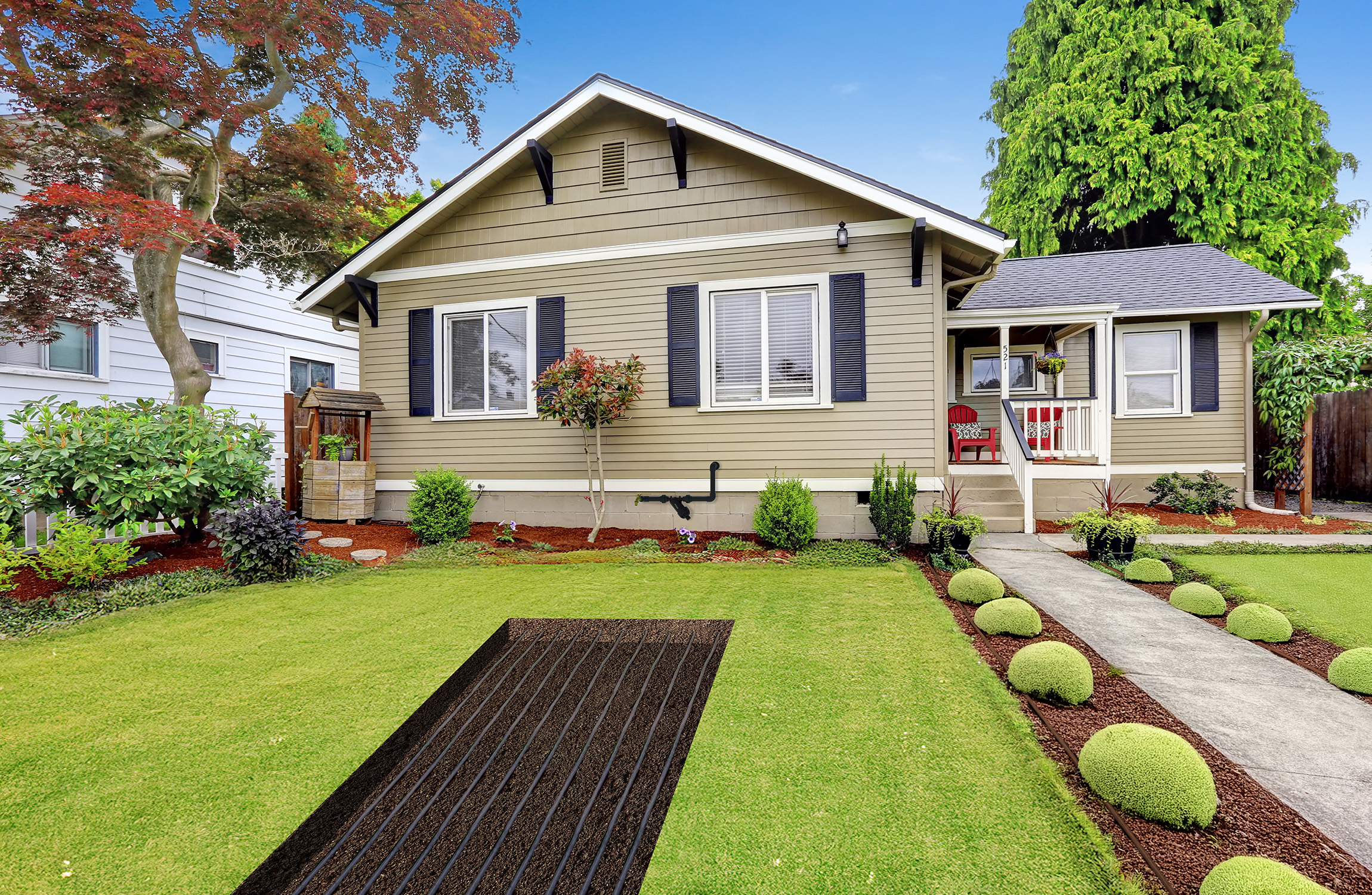
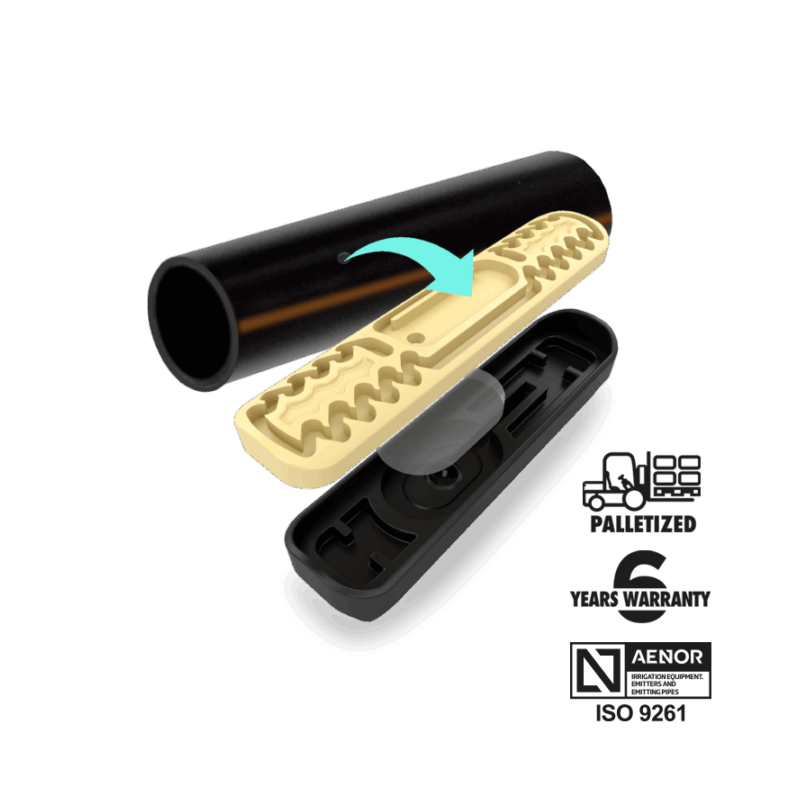
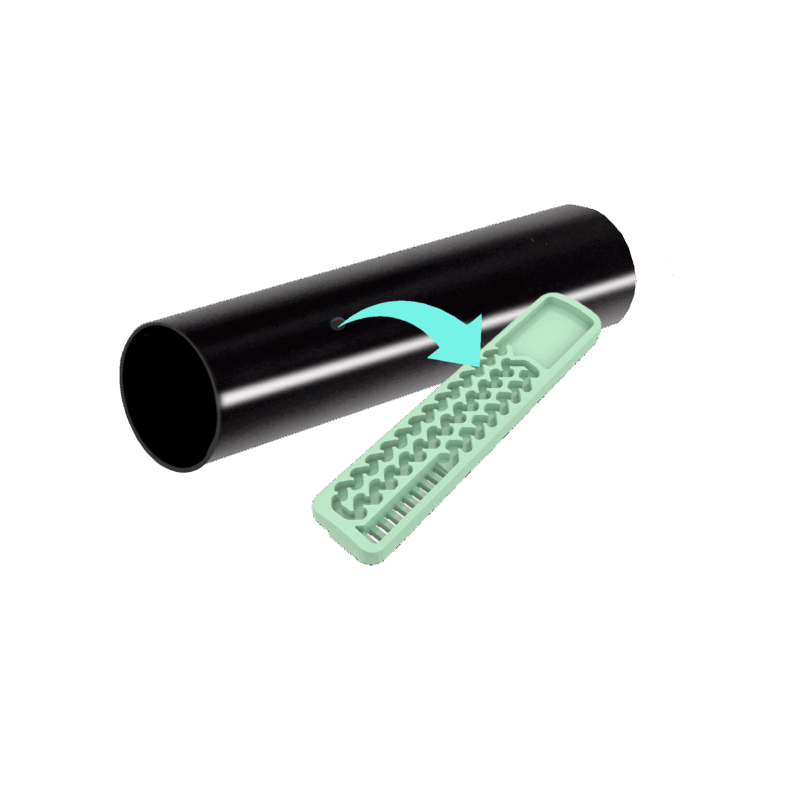
One of the advantages offered by theSUB-SURFACE DRIP IRRIGATION (RGS) is the application of water in such a way that the humidity does not reach the surface of the soil, avoiding the loss of water by evaporation. In order to obtain a correct Operation of this irrigation system, it must be designed, installed and operated by specialized personnel. If we suffer from low water supply and/or the quality of the water is not the most adequate for irrigation, RGS systems can be a good solution. The emitting pipes are buried at a certain depth -depending on the crop, planting system and soil type- and once the water supply is made, it is applied directly where the active roots of the plant are located. In this way, we avoid the appearance of moisture on the soil surface. The Irrigation application efficiency -not only of water, but also of nutrients- obtained with the RGS system is the highest of all, reducing operating costs as well